

In the shadow of Netaji, Divyang talent takes centre stage
More than a mela, Divya Kala Mela 2025 is a platform transforming lives through dignity, opportunity and self-reliance
In the shadow of Netaji, Divyang talent takes centre stage
Held at India Gate near the statue of Netaji Subhas Chandra Bose, Divya Kala Mela 2025 emerged as a powerful celebration of talent, resilience and inclusion. Drawing thousands of visitors daily, the mela showcased the creativity and entrepreneurial spirit of persons with disabilities from across India, offering them direct market access, economic empowerment and social recognition.
From inspiring individual success stories to broader impacts on inclusivity, cultural preservation and sustainability, the initiative underscores how the right platforms can transform lives and bring divyang abilities firmly into the national mainstream
At India Gate, where the life-size statue of Netaji Subhas Chandra Bose has been installed, thousands of people were arriving daily in recent days. After paying homage to Netaji's statue, they were all spellbound, witnessing the talent, creativity, and entrepreneurship of persons with disabilities. The occasion was the Divya Kala Mela 2025.
Now, such melas are being organised in all states of the country. Stalls of divyang ( Disaabled) artists and entrepreneurs who came to this mela were set up, where they were displaying handicrafts, paintings, jewellery, food products, and other handcrafted items. This mela is an important effort to bring the abilities of divyang into the mainstream.
The organisation of such melas not only provides economic opportunities to persons with disabilities but also strengthens the spirit of inclusivity in society. Moreover, seeing the statue of Netaji Subhas Chandra Bose nearby fills them with the enthusiasm to overcome obstacles.
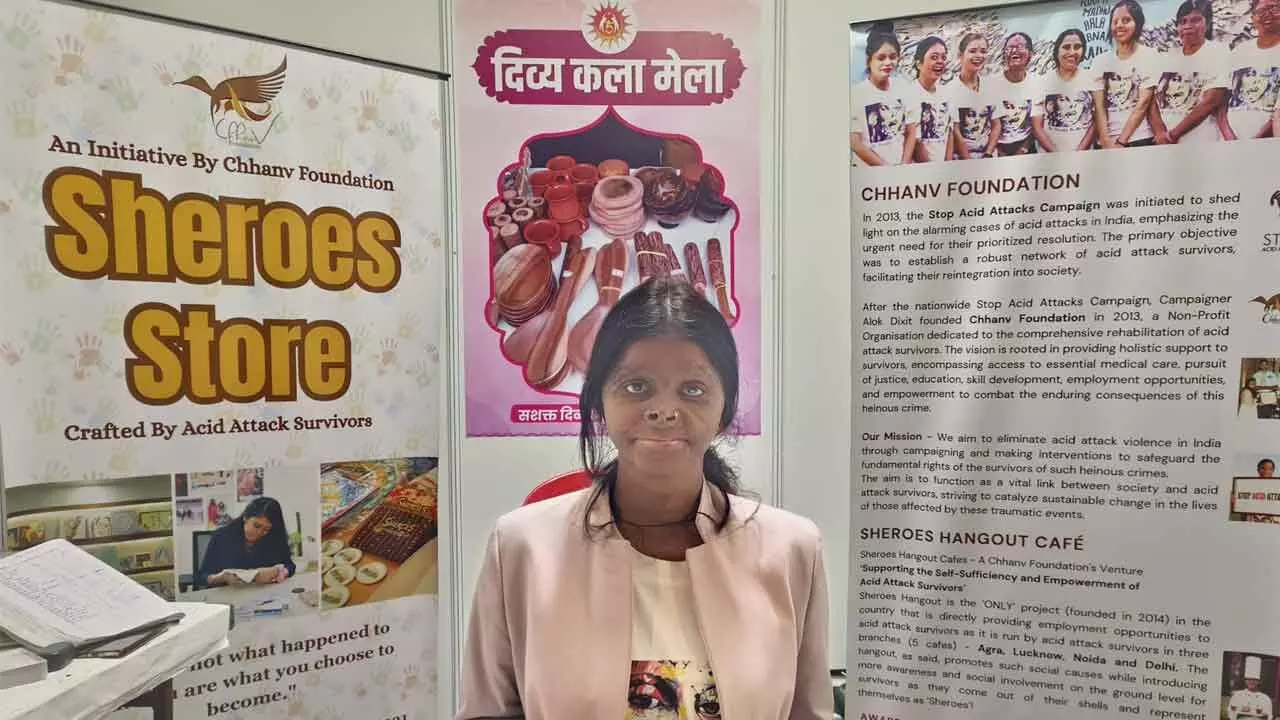
Now, let us look at some success stories of persons with disabilities that can serve as inspiration from these melas. The first example is that of Khushi. She is from Gorakhpur in Uttar Pradesh. She was a victim of an acid attack. The case is ongoing. At the mela, she was selling beautiful diaries, bags, and other items made by her own hands.
Then there is Neetu. She is a visually impaired divyang woman who has achieved success through her art. Neetu made her embroidery art a part of her life, and today she is known as a renowned embroidery artist. Events like Divya Mela provided her a platform where she showcased her art and received appreciation from society. Now, she not only sells her art but has also trained other persons with disabilities like herself.
One more example: Jyoti Kumari has made her mark in the world of fashion design despite her physical disability. The clothes and accessories designed by her were displayed at Divya Mela, which were extremely beautiful and full of style. Her success has proven that people with disabilities can achieve excellence in any field, provided they get the right direction and opportunities.
These stories show that platforms like Divya Kala Mela can further promote such successes.
The benefits of events like Divya Kala Mela are multi-dimensional. First and foremost, they are powerful means of economic empowerment. There are crores of persons with disabilities in India, many of whom come from rural areas and remain deprived of employment opportunities. By getting the chance to set up stalls in such melas, they can directly reach their products to consumers.
For example, in this year's mela—its 28th edition—hundreds of divyang entrepreneurs participated, earning income by selling their handicrafts. This not only enhances their economic independence but also gives them an understanding of the market.
Government-provided assistance, such as travel allowances and stall facilities, allows these individuals to participate without any additional burden. They received ₹2200 per day for accommodation. As a result, many persons with disabilities establish small businesses and become self-reliant, contributing to poverty alleviation.
The second major benefit is social inclusivity. Society often harbours prejudices and a sense of pity toward persons with disabilities, but such melas change this perception. The mela features facilities like an 'Accessibility Simulation Zone,' where ordinary people can experience the challenges of disability. This increases empathy and understanding, laying the foundation for an inclusive society.
Being held at India Gate in a metropolis like Delhi, this mela attracted a very large number of tourists and local residents, who were inspired by seeing the talent of divyang artists. This makes people with disabilities feel included in the mainstream and boosts their confidence. Such events spread awareness about disability, leading to improvements in education and employment policies.
For instance, in the last decade in the country, reservations and schemes for persons with disabilities have increased, and platforms like these melas promote those schemes.
The products displayed at Divya Kala Mela also reflect the diversity of Indian culture—from Rajasthani handicrafts to bamboo products from the Northeast. This not only preserves cultural heritage but also gives divyang artists the opportunity to take their art to a global level. Cultural programs, dance, and music performances continued at the mela, highlighting the multifaceted talent of persons with disabilities.
This inspires the younger generation, and divyang children become motivated to realize their dreams. From an environmental perspective as well, these melas are beneficial, as many products are made from eco-friendly materials, promoting sustainable development. Overall, such melas contribute to the collective development of society, where every individual's potential is respected.
This mela is organized by the Department of Empowerment of Persons with Disabilities (DEPwD) under the Ministry of Social Justice and Empowerment, which is an important effort to bring the abilities of divyang into the mainstream. The organisation of such melas not only provides economic opportunities to persons with disabilities...
Coming to India Gate, persons with disabilities from across the country continued to draw inspiration from Netaji Subhas Chandra Bose, whose statue is installed right there.
(The author is Delhi-based senior journalist and writer. He is author of Gandhi's Delhi which has brought to the forth many hidden facts about Mahatma Gandhi)





